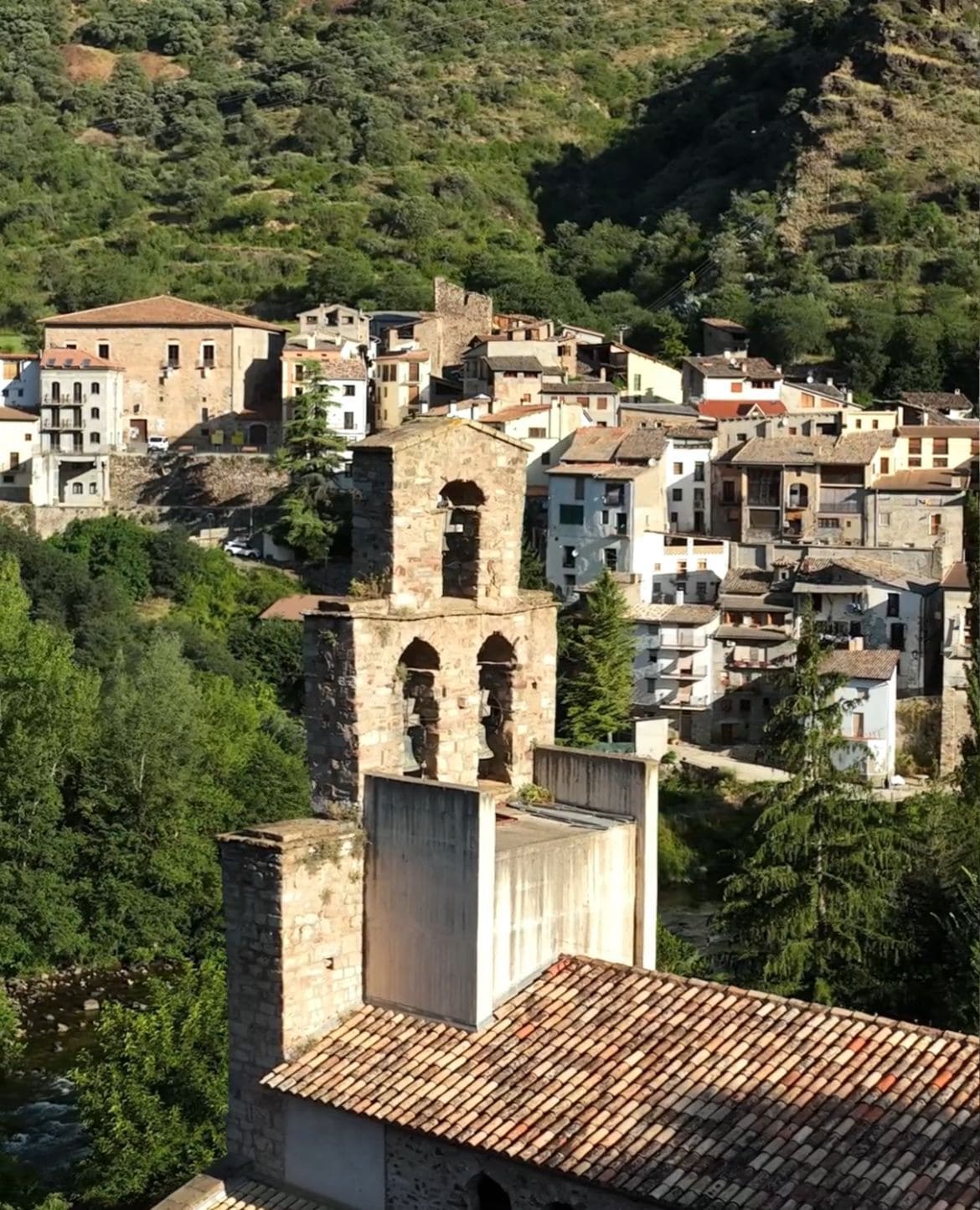
The Monastery of Santa Maria de Gerri

Step into Santa Maria de Gerri and let yourself be captivated by the mark left by a monastery that shaped the history of the area. Walk through its thousand-year-old church, admire the details of its carved capitals and breathe in the calm of a place filled with memory and spirituality.
An essential visit for understanding the past and enjoying heritage in its purest form.

El Monestir des de l_entrada

Visits to the monastery

At the moment, the monastery can only be visited from the outside.

The Monastery of Santa Maria de Gerri: a Romanesque jewel in the heart of Pallars

Located in the municipality of Baix Pallars, the Monastery of Santa Maria de Gerri is one of the great landmarks of Romanesque heritage in Catalonia. Founded in 807, it became one of the most influential religious and economic centres in the Diocese of Urgell, and even today it retains its splendour through its majestic church.

The monastery was founded by the priest Espanell under the dedication of Saint Vincent. According to the foundation charter, which has been preserved although not in its original form, it was a private foundation: Espanell built the church, endowed it with his own property and gathered five companions there, who accepted him as abbot. At first, the Rule of Saint Fructuosus was followed, but by 839 the Benedictine Rule had already been adopted.

A territorial and spiritual expansion

During the 9th and 10th centuries, the monastery expanded its possessions through donations, purchases and privileges granted by the papacy and the nobility of Pallars. It played a key role in the reorganisation of the territory after liberation from Arab rule.

Direct dependence on Rome

To avoid interference from the counts of Pallars and the Diocese of Urgell, Pope John XII granted a privilege in 966 that placed the monastery under the direct authority of the Holy See.

A period of splendour

The 11th and 12th centuries were the monastery’s most brilliant period. In 1096 it became part of the monastery of Saint Victor of Marseille, and in 1149 the new church was consecrated under the dedication of Saint Mary, in a solemn ceremony attended by ecclesiastical and comital authorities from across the region.

The 13th century was a turbulent one. The monastery was occupied by the Count of Foix in 1274 and later by the House of Comminges. In the 14th century, the arrival of the Black Death, the decline in donations and conflicts with the local nobility further worsened its economic and spiritual situation.

The monastery joined the Benedictine Claustral Congregation of Tarragona at the end of the 16th century. In 1711 it suffered an attack during the War of the Spanish Succession, which led to the partial destruction of its buildings and the dispersal of its archive. Finally, with the secularisation of 1835, the community was dissolved and a large part of its heritage was lost.

Romanesque architecture of great value

The present building, consecrated in 1149, is a magnificent example of Catalan Lombard Romanesque architecture. It has a basilica plan with three naves, barrel-vaulted roofs and transverse arches resting on pillars with attached columns. Outside, the walls are reinforced with stone buttresses.

Outstanding features

  • Three semicircular apses: the central apse is decorated with blind arches and carved capitals, while the side apses are simpler.
  • Main doorway with atrium: a semicircular arch protected by a three-aisled atrium with groin vaults and decorated capitals.
  • Bell gable: three storeys high, with double openings and a single opening on the upper level.
  • Baroque elements: sacristy, shrine chamber and galleries added in the modern period.