
Salt Pans of Gerri de la Sal
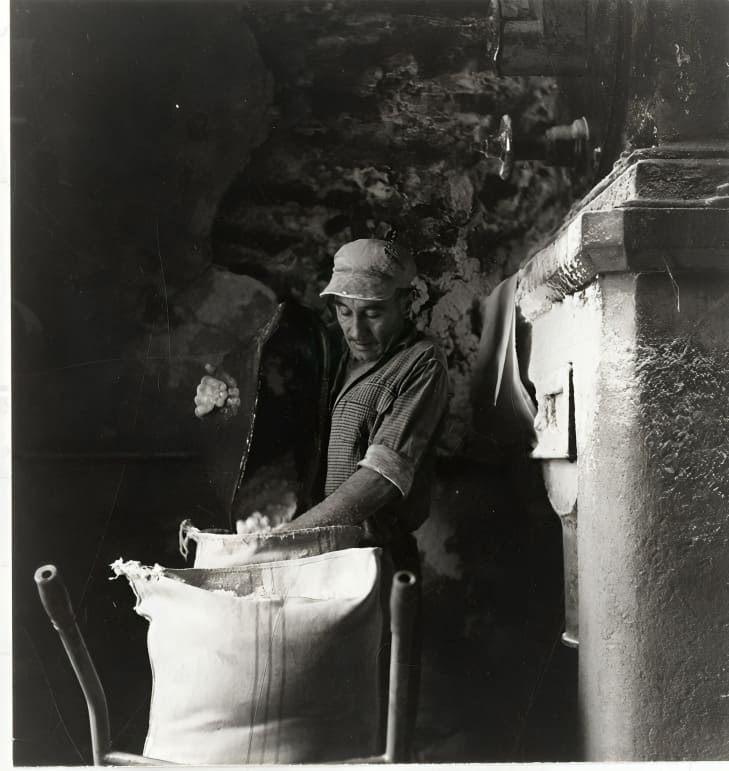
The history of Gerri de la Sal cannot be understood without talking about the saltwater spring and the salt pans that surround it. This natural and productive setting is the origin of the wealth that transformed the area for centuries.
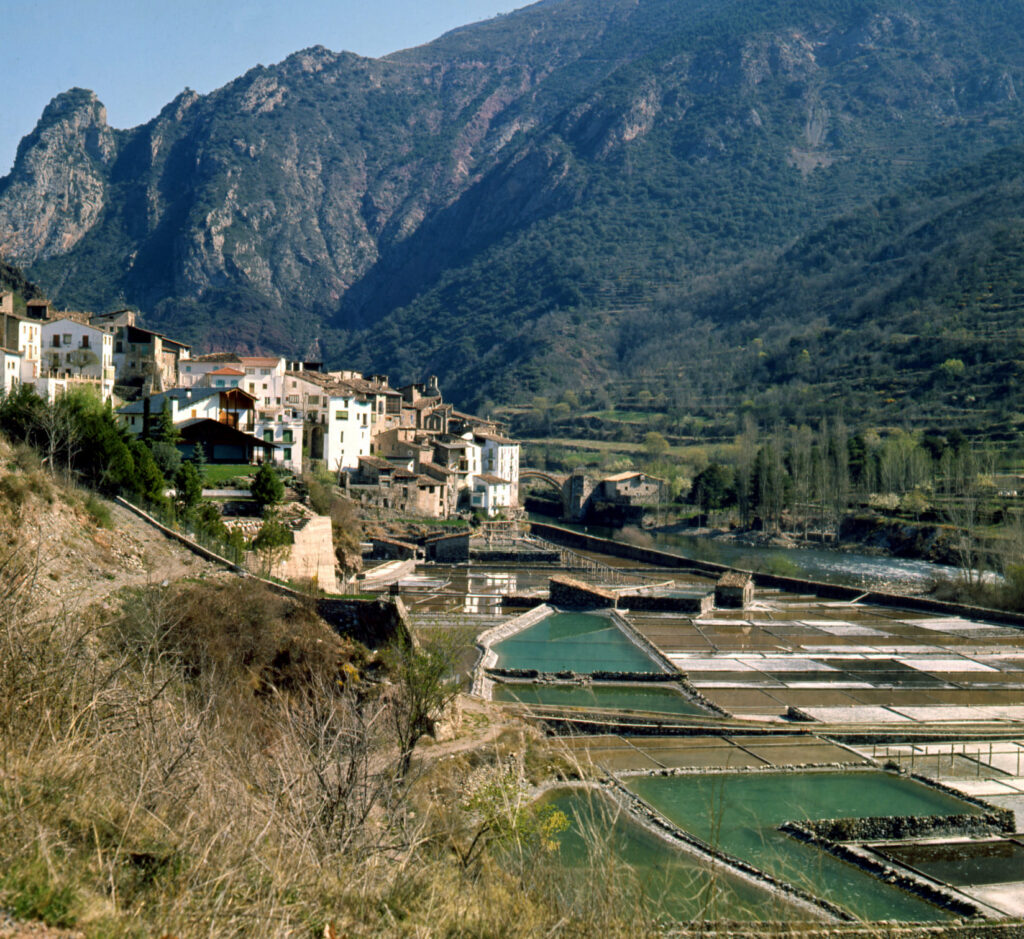
Would you like to see this process with your own eyes?
We look forward to welcoming you to the salt pans of Gerri, a unique place where you can discover how the landscape and human ingenuity have transformed water into salt for centuries.
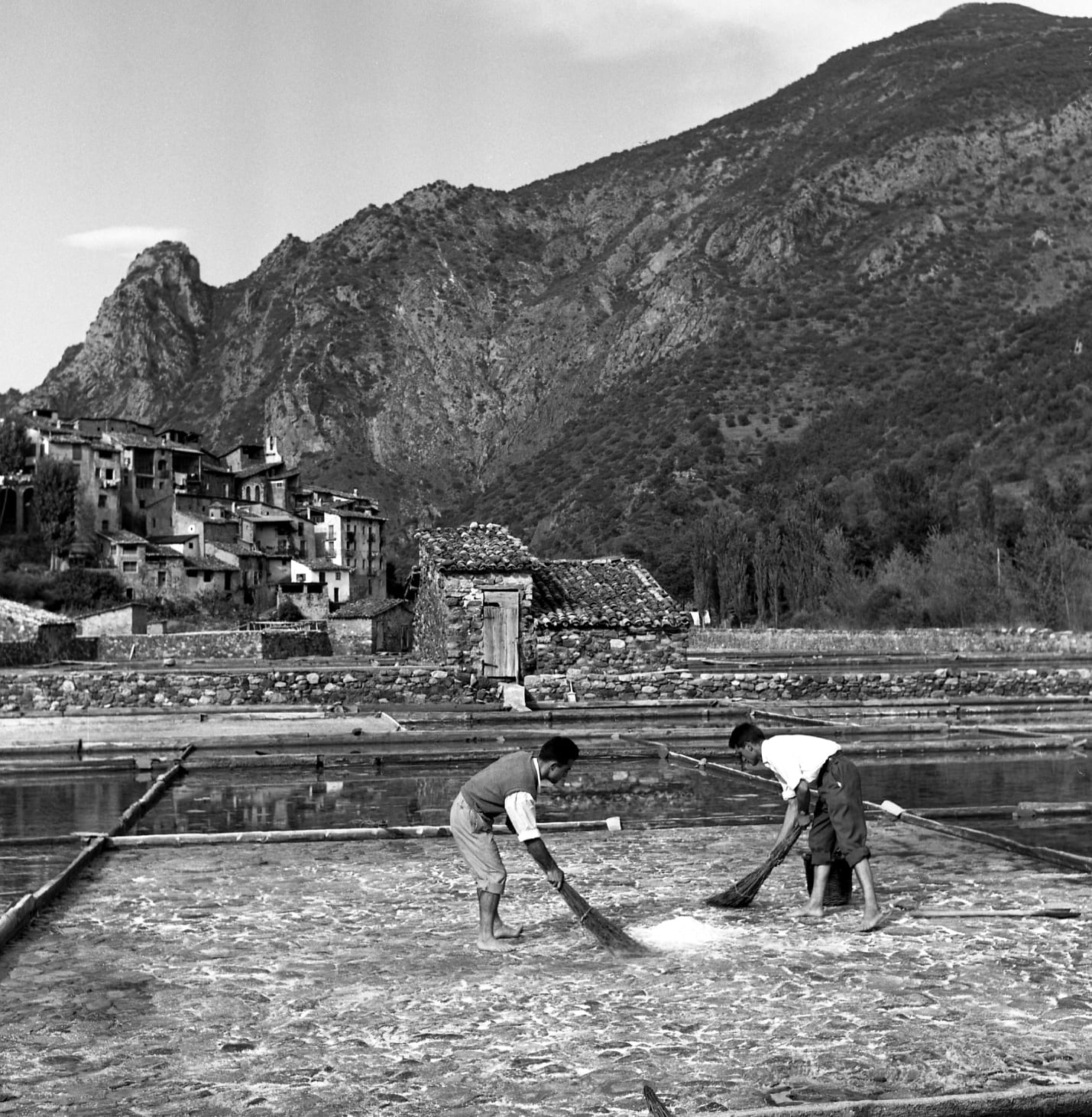
A legacy born in 807
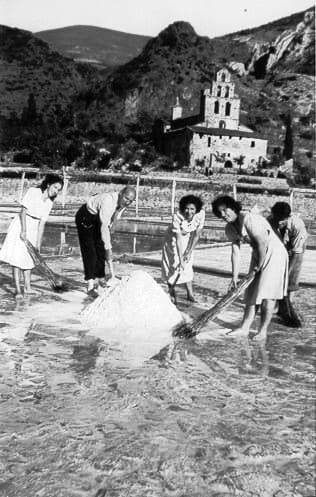
The first documented references to the salt pans date back to the year 807, in the foundation charter of the Monastery of Santa Maria de Gerri. In this document, the monks appear as the owners of the 11 hectares of salt-working land, exploiting it as their main source of wealth until the 18th century. Salt, known as white gold, was so valuable that the monks settled right next to the spring itself.

A karst spring with marine origins
The saltwater that emerges in Gerri has a history that began 210 million years ago, when this area formed part of the Tethys Sea. When this sea dried up and the Pyrenees were formed, the salt deposits remained trapped underground. Today, underground freshwater passes through these layers of rock salt, becomes saline and emerges through the spring.
Characteristics of the spring
- The water emerges at a temperature of around 20°C.
- Its salinity is very high: between 70 and 80 grams per litre.
- The extraction flow can reach up to 50,000 litres per hour.
- Access is via a stone staircase leading down to a cave with walls coated in carbonates and small stalactites.

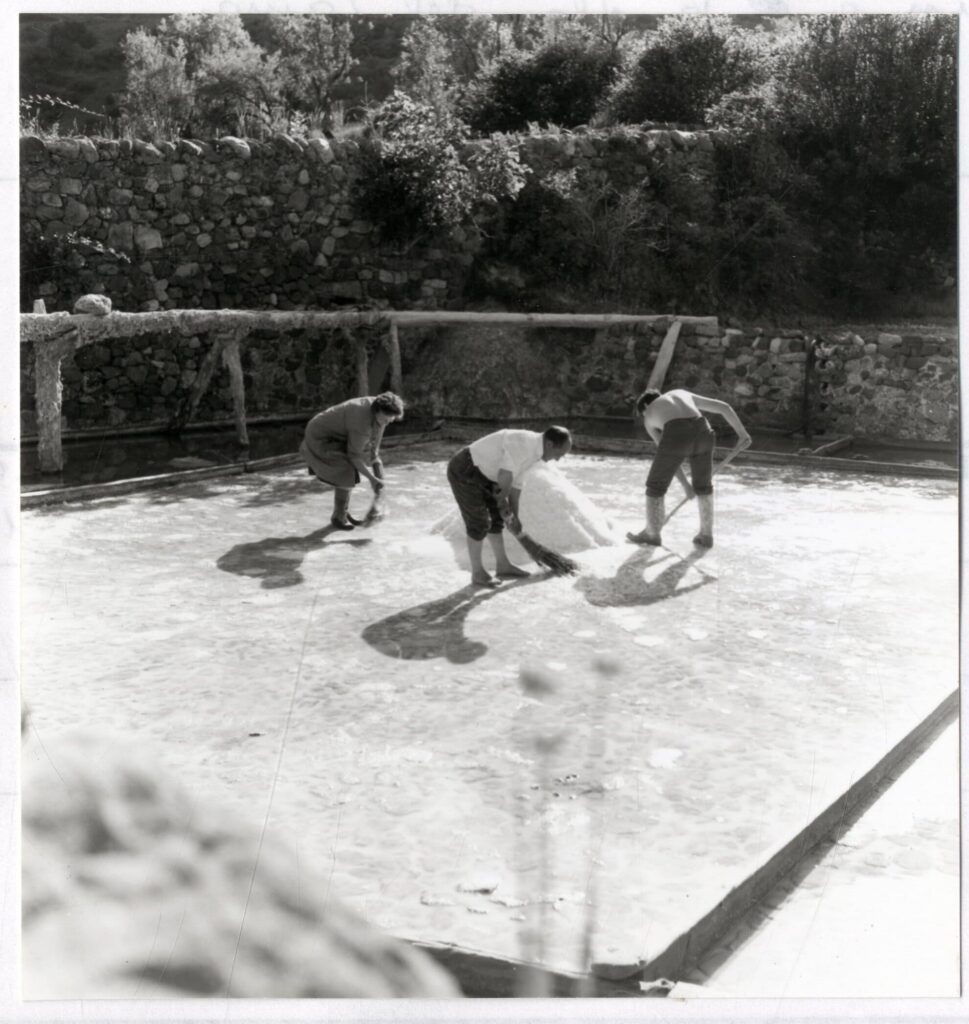
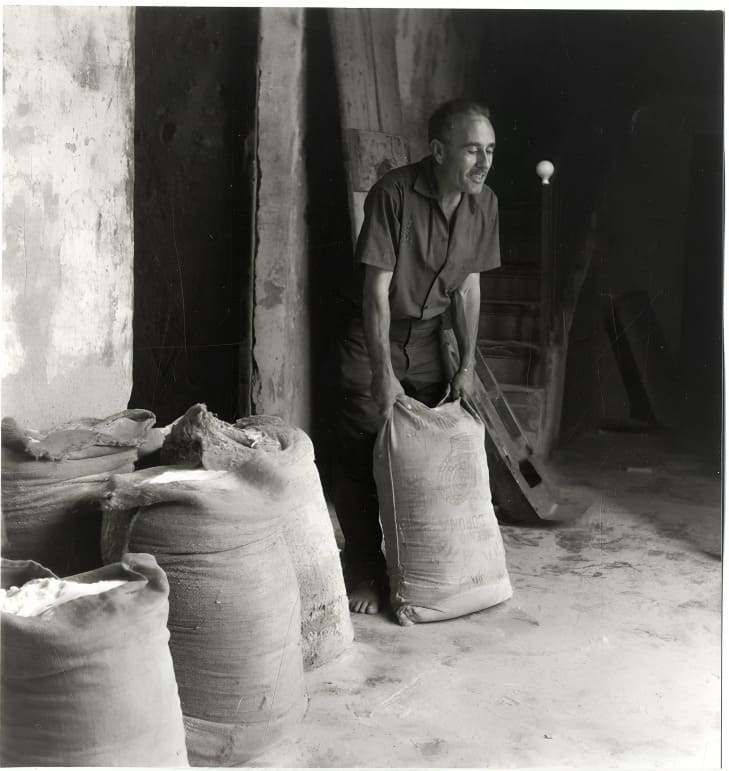
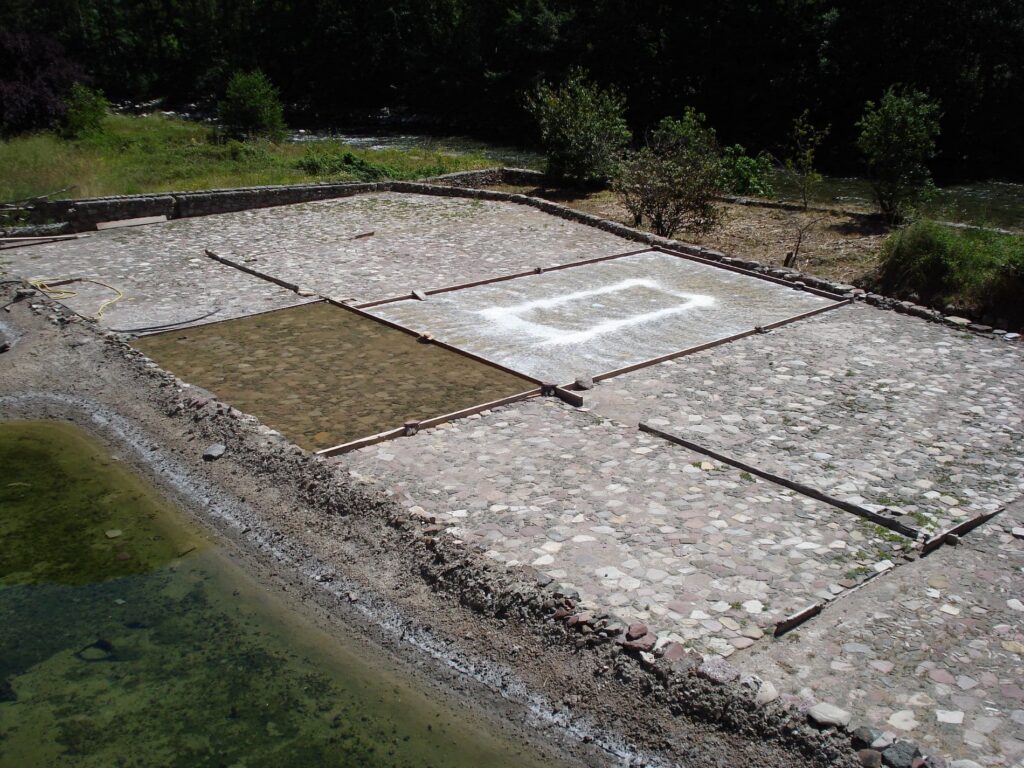

The salt-making process: key elements
The salt pans of Gerri worked like a precise mechanism. Every element in the complex had a specific function:
- Pump house: Located beside the spring, it was used to pump the saltwater into the distribution channels.
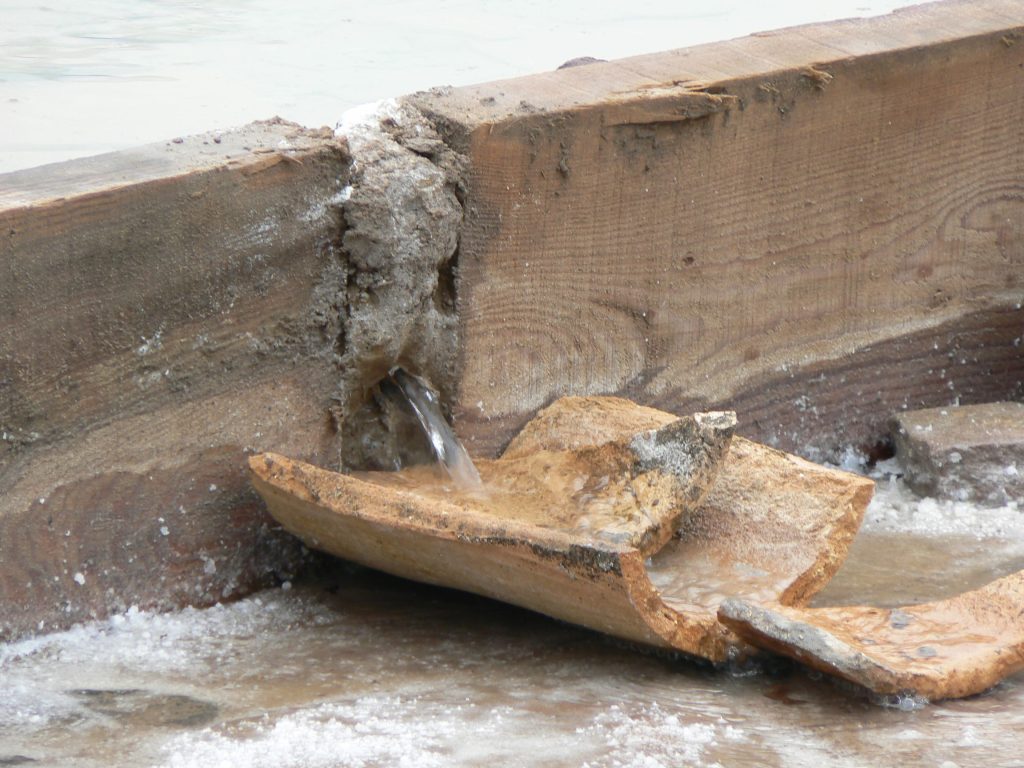
- Reguer: A system of Scots pine wooden channels that distributed the water to the different salt pans.
- Toll: A storage tank where the saltwater was kept throughout the year.
- Arcabota: A space where the water was left to settle for three days to increase its salinity and remove impurities.
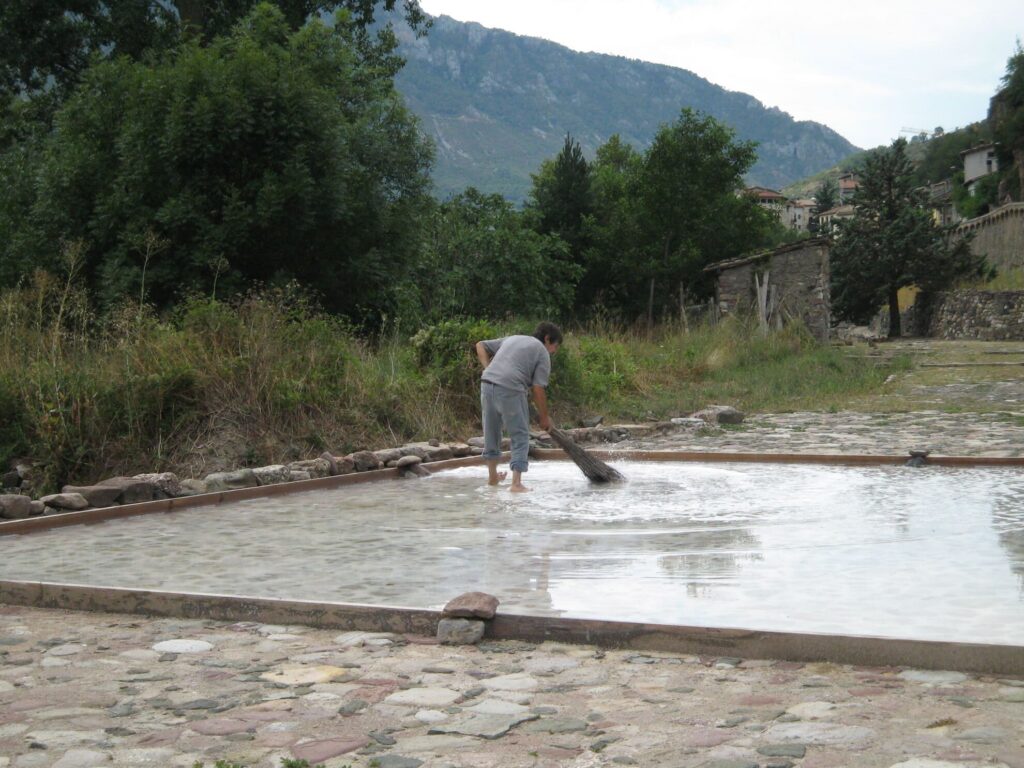
- Era: The final area where the water was left so that the salt could crystallise naturally.