
Baén
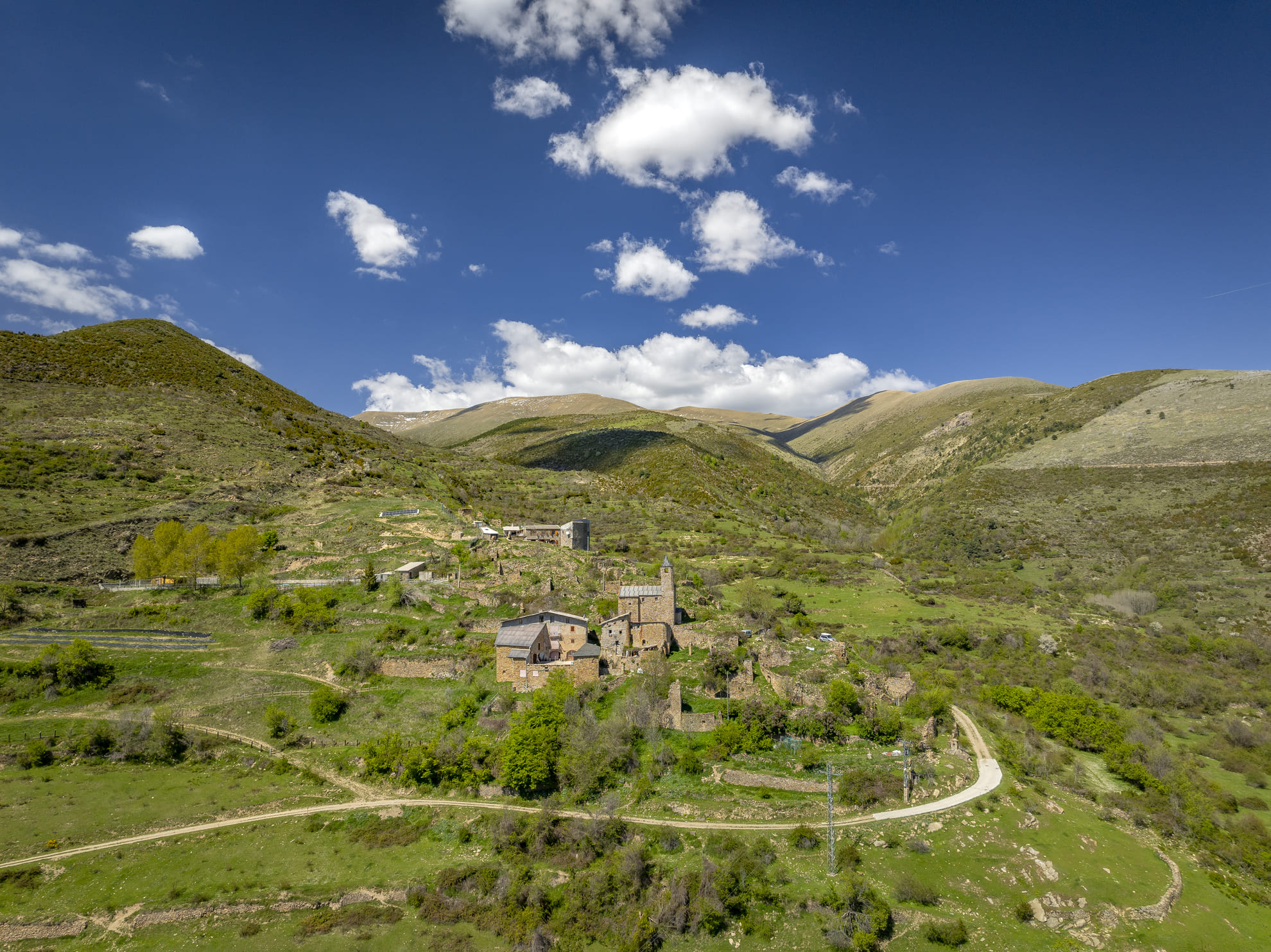
Baén: Heritage, history and nature at the foot of Boumort
Located in the north-east of the municipality of Baix Pallars, at 1,069 metres above sea level, the village of Baén forms part of the area historically known as “Sobre Gerri”. It borders Enseu to the north, Useu to the east, Buseu to the south and Sant Sebastià de Buseu to the west, all of them villages within the same municipality.
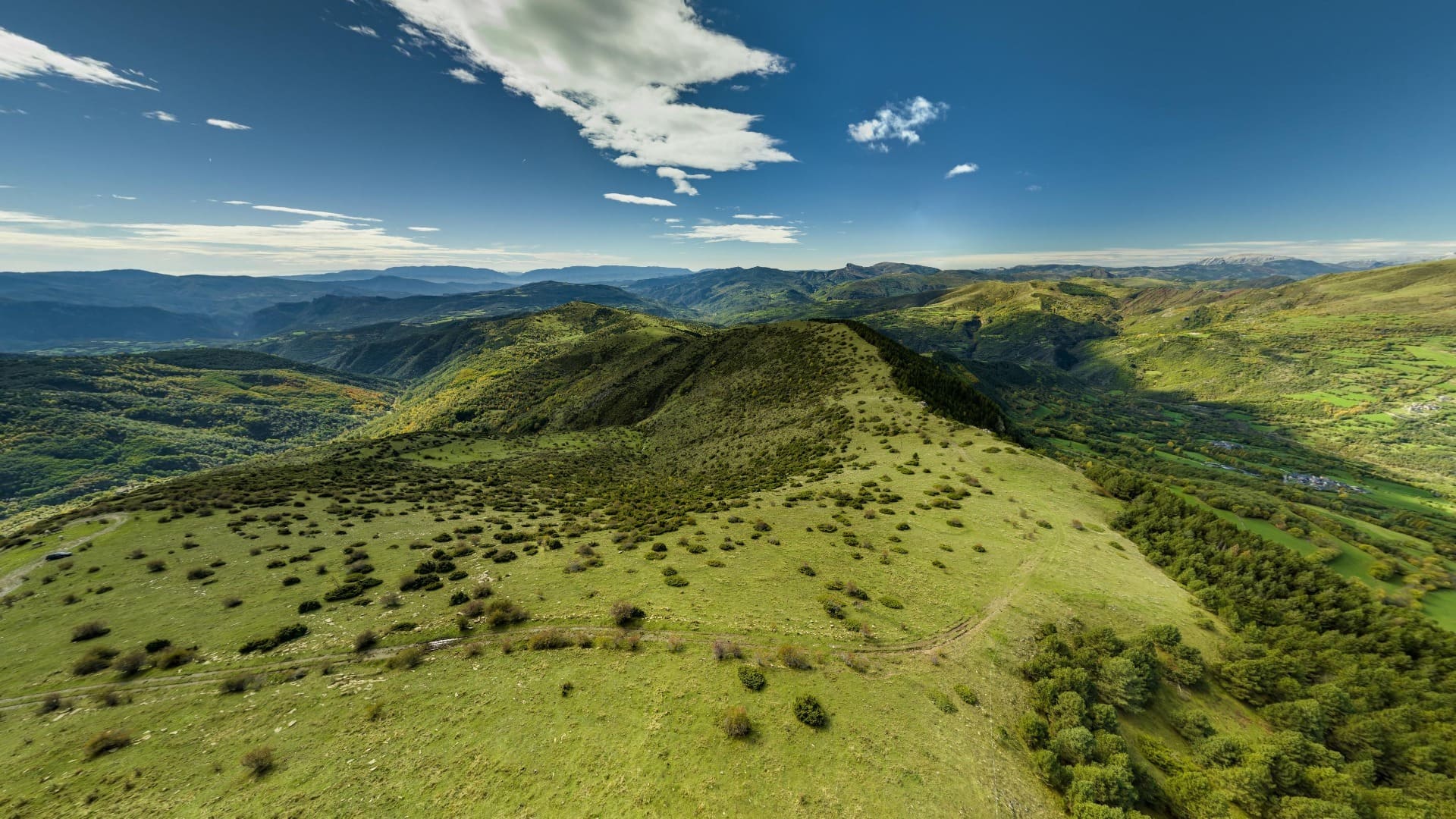
Baén was once an independent municipality, which in the 19th century expanded to include the villages of Buseu, Sant Sebastià, Cuberes, Castellnou, Solduga, Useu, Vilesa, el Pui, el Soi and l’Espluga de Cuberes. In 1969, it lost its autonomy and became part of the municipality of Baix Pallars.
Located at the foot of the Boumort mountain range, Baén stands out for its rich landscape, making it an ideal place for hiking, mountain biking and wildlife observation, including deer, foxes, wild boar and birds of prey.
The village is arranged along a single street with a central square, with an elongated and compact structure at the foot of the Roca del Castell, where the old castle of Baén once stood, now disappeared. At the entrance to the village, the washhouse, the old watering trough, and the Romanesque church of Sant Andreu are still preserved.
Declared a Local Cultural Heritage Site, it is a Romanesque building with a single nave and semicircular apse, featuring a double-splayed window and a round arch. In the 17th century, the following were added:
- Symmetrical side bodies (of which only the southern one survives)
- A new door in the west façade
- A modified bell gable
The first written mention of Baén dates from 920, when its inhabitants granted their allods to Count Ramon I of Pallars. By the end of the 11th century, the castle was already part of the holdings of the monastery of Gerri, a possession confirmed by the bull of Alexander III (1164).
During the 14th century, jurisdiction was shared between the counts of Pallars and the abbot of Gerri. The Count of Foix and Viscount of Castellbò acquired part of the rights in the 15th century. In this context of tension, in 1439, Baén was besieged by the troops of the Count of Foix, an ally of Queen Maria in the conflicts with the Pallars comital house.
The fortified house of Vilesa
Three kilometres before reaching Baén, on the right-hand side of the road, we find the farmhouse of Vilesa. In the middle of the forest, about 100 metres away, stands the old fortified house of Vilesa, a building with three levels, a trapezoidal floor plan, massive walls and loopholes, dated between the 12th and 13th centuries.
The church of Sant Sebastià del Rial
To the north of the village, in the place known as el Rial, the remains of the old church of Sant Sebastià are preserved, a building with a single nave and a semicircular apse to the east. Although quite damaged due to its use as a shed, the surviving structures suggest that it was a notable building, probably linked to an old late-medieval abandoned settlement, identifiable by the surrounding stone walls.
Castellnou is a small hilltop hamlet located in the eastern sector of the municipality of Baix Pallars, in the area known as “Sobre Gerri”, at 1,608 metres above sea level. Due to its small size (the hamlet once had three houses, of which only one remains today), it never had its own town council: it belonged to the former municipalities of Buseu and Sant Sebastià de Buseu and, in the mid-19th century, became part of the municipality of Baén, which was incorporated into Baix Pallars in 1969.
At the top of the hill remain the ruins of the collapsed houses and of the old castle, which belonged to the counts of Pallars and later to the Marquessate of Pallars, when it passed to the House of Cardona.
Castellnou enjoys privileged views over Boumort and the Riu Major ravine, and has become an ideal place to enjoy peace and quiet and observe wildlife.